

Search
Enter keywords to search for products, blog posts, and more.
Enter keywords to search for products, blog posts, and more.
Home > How to Choose the Right Electric Water Heater OEM Manufacturer in China: A Complete Sourcing Guide
For brands, distributors, and project contractors looking to source electric water heaters, China remains the world's most competitive manufacturing base. The country accounts for a dominant share of global water heater production capacity, with major manufacturing clusters concentrated in Guangdong Province — particularly in cities like Zhongshan, Foshan, and Shunde, where decades of supply chain maturity have created an ecosystem that is difficult to replicate elsewhere.
But finding the right electric water heater OEM manufacturer is not as simple as searching an online directory and requesting quotes. The water heater industry involves pressurized vessels, high-voltage heating elements, and long-term corrosion resistance — all of which demand rigorous engineering and quality control. A poorly chosen OEM partner can result in product failures, certification delays, customer complaints, and serious brand damage.
This guide walks you through every critical factor to evaluate when selecting an electric water heater OEM manufacturer in China, drawing on real industry experience to help you make an informed decision.
Why China Dominates Electric Water Heater Manufacturing
China's position as the global leader in electric water heater manufacturing is built on several structural advantages that are worth understanding before you begin your sourcing process.
First, the raw material supply chain is deeply localized. The steel plates used for inner tanks, the enamel powder for corrosion-resistant coatings, the polyurethane foam for insulation layers, and the electronic control components — all of these are produced within close proximity to the assembly plants. This supply chain density translates directly into lower material costs and shorter procurement lead times compared to manufacturers in other regions.
Second, the manufacturing workforce in Guangdong's appliance corridor has accumulated generations of production experience. Cities like Zhongshan have been producing water heaters for over three decades, and the concentration of skilled technicians — from welders and enamel coating operators to quality inspectors — creates a labor pool that is both experienced and cost-efficient.
Third, the certification infrastructure is well established. China has national testing laboratories accredited for CCC (China Compulsory Certification), and many manufacturers have invested in their own state-registered energy efficiency laboratories. This means that product testing, certification, and iteration can happen faster and at lower cost than in countries where testing infrastructure is less developed.
For international buyers, these advantages mean that sourcing from a Chinese electric water heater OEM manufacturer offers a compelling combination of price competitiveness, technical capability, and production scalability — provided you choose the right partner.
Key Factor 1: Inner Tank Technology — The Core of Product Quality
The inner tank is the single most critical component of any storage electric water heater. It determines the product's lifespan, safety, and long-term reliability. When evaluating an electric water heater OEM manufacturer, the inner tank technology should be your first area of investigation.
There are several types of inner tank construction used in the industry today. The most common and widely trusted is the enamel-lined steel tank, where a layer of porcelain enamel is fused onto the interior surface of a low-carbon steel vessel through high-temperature firing (typically around 850–890°C). This enamel layer provides corrosion resistance against hot water and mineral deposits, which is essential for product longevity.
What separates a good enamel tank from a mediocre one comes down to three things: the quality of the enamel powder formulation, the precision of the application process, and the firing temperature control.
Leading electric water heater OEM manufacturers invest in imported enamel production lines — for example, equipment from EISENMANN (Germany), which is considered the industry benchmark for automated enamel coating systems. These lines ensure uniform enamel thickness, consistent firing temperatures, and minimal defect rates across large production volumes.
Another critical detail is the welding process used to join the tank sections. The industry has been transitioning from overlap (lap) welding to butt welding, which produces a smoother internal seam with less opportunity for enamel cracking at the joint. Top-tier OEM manufacturers adopted this butt welding process early, recognizing that weld seam quality directly affects the long-term leak rate of the inner tank.
When visiting a potential OEM partner's factory, ask specifically about their enamel line equipment brand, their firing temperature range, whether they use butt welding or lap welding, and what their internal defect rejection rate is for finished tanks. These details reveal more about product quality than any sales presentation.
Key Factor 2: Production Capacity and Manufacturing Equipment
Production capacity matters — not just in terms of total annual output, but in terms of the manufacturer's ability to handle your specific order volume, product mix, and delivery schedule.
A credible electric water heater OEM factory should be able to provide clear information about their facility size, number of assembly lines, and annual production capacity. For context, a mid-to-large-scale electric water heater OEM manufacturer in China typically operates from a facility of 30,000 to 50,000 square meters, with multiple standardized assembly lines capable of producing 500,000 to 1,500,000 units per year.
Beyond raw numbers, pay attention to the level of automation. Modern water heater manufacturing relies on automated processes for several critical steps: inner tank welding, enamel spraying, powder coating of outer shells, foam insulation injection, and final electrical testing. Manufacturers who have invested in automated equipment — such as WAGNER powder coating systems for outer shells — can deliver more consistent quality at higher throughput, with lower dependence on manual labor variability.
The presence of a MES (Manufacturing Execution System) is another strong indicator of manufacturing maturity. MES provides real-time tracking of production progress, defect rates, and material consumption at each workstation. Combined with an ERP system (such as U9 Cloud) and a WMS (Warehouse Management System), these digital tools enable the manufacturer to manage complex multi-SKU OEM orders with precision — ensuring that your specific model configurations are produced correctly and shipped on time.
Ask your potential OEM partner whether they have implemented digital manufacturing systems, and if possible, request a demonstration during your factory visit. The presence of PLM (Product Lifecycle Management), MES, WMS, and ERP systems together indicates a factory that has invested seriously in operational excellence.
Key Factor 3: Certifications and Testing Capabilities
Certifications are non-negotiable in the water heater industry. Depending on your target market, your products will need to meet specific safety and energy efficiency standards — and your OEM manufacturer must be equipped to support this.
For the Chinese domestic market, CCC (China Compulsory Certification) is mandatory. For export markets, the most commonly required certifications include CE (European Union), CB (international mutual recognition scheme), and ROHS (restriction of hazardous substances). Some markets may also require additional country-specific certifications.
Beyond holding these certifications on their existing product lines, a strong electric water heater OEM manufacturer should have their own in-house testing laboratory — ideally one that is registered with national authorities and capable of issuing energy efficiency test reports. This is important because it allows the manufacturer to conduct pre-certification testing during the product development phase, catching potential compliance issues before the product is sent to an external lab. This saves weeks or even months in the certification timeline.
A well-equipped water heater testing laboratory should cover at minimum the following categories: energy efficiency testing, electrical safety testing, temperature control accuracy testing, pressure testing, salt spray corrosion testing, vibration simulation testing, and component lifespan testing (for heating elements, thermostats, and leakage protection devices).
If your OEM manufacturer operates a state-registered energy efficiency laboratory with over 100 comprehensive testing items, this is a significant quality indicator — it means the factory takes testing seriously enough to invest substantial capital in laboratory infrastructure rather than relying solely on external testing agencies.
Key Factor 4: R&D Capability and Patent Portfolio
The ability to develop new products — or to customize existing designs to your specifications — depends entirely on the manufacturer's R&D strength.
A dedicated R&D team of 15–25 engineers is typical for a serious electric water heater OEM manufacturer. This team should include mechanical engineers (for tank and structure design), electrical engineers (for control system development), and materials engineers (for enamel formulation and insulation optimization).
One concrete way to assess R&D capability is through the manufacturer's patent portfolio. A manufacturer with 50 or more patents — including both utility model patents and invention patents — has clearly invested in original technology development rather than simply copying existing designs. Invention patents, in particular, require a higher bar of novelty and are a stronger indicator of genuine innovation.
Look for patents that address real product challenges in the water heater industry, such as anti-scale technology (devices that reduce mineral buildup inside the tank), UV sterilization systems (for improving water hygiene), improved insulation structures (for achieving higher energy efficiency ratings), and innovative control interfaces. These patents tell you that the manufacturer is thinking about product differentiation — which is exactly what you need if you want your branded products to stand out in a competitive market.
Another R&D indicator is whether the manufacturer develops all product molds in-house. In-house mold development means faster design iteration, tighter quality control over components, and the ability to create truly custom product appearances rather than being limited to generic shared molds.
Key Factor 5: OEM/ODM Service Model and Brand Protection
Not all OEM manufacturers operate the same way, and the differences in their service model can significantly impact your experience as a brand partner.
The most important distinction to look for is whether the manufacturer operates their own retail brand. Manufacturers who sell their own branded products in the market are, by definition, competing with their OEM clients. This creates an inherent conflict of interest: they may prioritize their own brand's orders during peak season, reserve their best designs for their own product line, or even release products that are visually similar to what they produce for you.
The ideal OEM partner is one that is purely focused on manufacturing and does not operate their own consumer-facing brand. This ensures zero brand conflict — your designs, molds, and proprietary features remain exclusively yours, and the manufacturer has no incentive to compete with you in any market.
Beyond brand protection, evaluate the scope of services the OEM manufacturer provides. A full-service OEM/ODM partner should offer product appearance customization (shell color, panel material, logo placement), private label packaging (retail-ready boxes with your branding, barcodes, and multilingual manuals), certification support (assisting with CE, CB, and other market-specific certifications), and dedicated project management (a single point of contact from sample approval to container loading).
Some advanced OEM manufacturers go even further, offering value-added services such as market insight sharing (providing industry data on trending product features and price points), product line competitiveness diagnosis (analyzing your current lineup against market benchmarks), and new product line planning (proposing new models based on market gaps). These services transform the relationship from simple manufacturing to strategic partnership.
Key Factor 6: Quality Control Systems and After-Sales Support
Quality control in water heater manufacturing cannot be limited to final inspection. It must be embedded throughout the entire production process — from incoming material inspection, through in-process checks at critical workstations, to final product testing before packaging.
Ask your potential OEM partner to walk you through their quality control process step by step. At minimum, you should expect incoming quality control (IQC) for all raw materials and components, in-process quality control (IPQC) with checks at welding, enamel coating, assembly, and electrical connection stages, outgoing quality control (OQC) with 100% electrical safety testing and water pressure testing on every unit, and a documented nonconformity management process with root cause analysis.
The availability of after-sales technical support is also important, particularly for brands that are new to the water heater category. Your OEM manufacturer should be able to provide technical documentation for your customer service team, spare parts supply for warranty repairs, and responsive communication for quality issue resolution — ideally with a commitment to initiate investigation within 24 hours and provide a resolution plan within 3 working days.
Understanding the Geography of Water Heater Manufacturing in China
Not all manufacturing regions in China are equal when it comes to electric water heater production. Understanding the geographic concentration of the industry helps you narrow your search and evaluate potential partners more effectively.
Guangdong Province is the undisputed center of water heater manufacturing in China. Within Guangdong, Zhongshan City — and specifically its Nantou Town district — has earned the reputation as the "home appliance capital" of China. This is where you will find the highest concentration of electric water heater OEM manufacturers, ranging from small workshops to large-scale modern factories with annual capacities exceeding one million units.
The advantage of sourcing from the Zhongshan cluster is access to a mature, localized supply chain. Component suppliers for heating elements, thermostats, enamel powder, steel plates, electronic control boards, safety valves, and packaging materials are all within a short driving distance of the assembly plants. This geographic density reduces logistics costs, shortens lead times for component procurement, and makes it easier for manufacturers to maintain quality control over their supply chain.
Foshan, located adjacent to Zhongshan, is another important manufacturing hub — particularly for kitchen appliances like range hoods, gas stoves, and integrated cookers. Some manufacturers in this region produce both water heaters and kitchen appliances, offering the advantage of a single-source supplier for brands that want to build coordinated product lines across multiple categories.
Zhejiang Province, particularly around the Ningbo and Cixi areas, is another significant manufacturing region, with a stronger focus on gas water heaters and export-oriented production. If your product requirements include both electric and gas water heaters, exploring manufacturers in both Guangdong and Zhejiang may give you a broader selection.
When evaluating manufacturers from different regions, consider not just the factory itself but the supporting ecosystem — the quality of nearby component suppliers, the availability of testing laboratories, and the logistics infrastructure for export shipping (proximity to major ports like Shenzhen, Guangzhou, or Ningbo).
Red Flags to Watch For When Evaluating OEM Manufacturers
While this guide has focused on positive indicators of a good electric water heater OEM manufacturer, it is equally important to recognize warning signs that suggest a manufacturer may not be the right partner.
Reluctance to allow factory visits is a significant red flag. Any legitimate manufacturer should welcome prospective partners to visit their production facility. If a manufacturer consistently makes excuses to avoid or delay factory visits, it may indicate that their actual production capabilities do not match their marketing materials.
Inconsistent or vague answers about technical specifications should raise concerns. When you ask about enamel thickness, firing temperature, insulation material specifications, or testing procedures, a knowledgeable manufacturer will provide specific numbers and detailed explanations. Vague responses like "we use the best materials" or "our quality is very high" without supporting details suggest a lack of genuine technical depth.
Unusually low pricing compared to other manufacturers of similar capacity is worth investigating carefully. In the water heater industry, there is a real cost floor determined by the price of steel, enamel powder, heating elements, and labor. Manufacturers who quote significantly below this floor are likely cutting corners somewhere — whether in material quality, enamel coating thickness, insulation density, testing rigor, or all of the above.
No intellectual property of their own — meaning no patents, no proprietary designs, no in-house mold development — suggests a manufacturer that is purely assembling commodity products from third-party designs and components. While this can still produce functional products, it limits your ability to differentiate your brand and suggests the manufacturer has not invested in genuine technical development.
High staff turnover, particularly in quality control and engineering roles, can indicate management problems that will eventually affect your product quality. During factory visits, try to meet the QC manager and chief engineer — if these roles change frequently, the institutional knowledge and process consistency that you depend on may be at risk.
How to Start Your Search: Practical Next Steps
Finding the right electric water heater OEM manufacturer is a process that benefits from systematic evaluation rather than impulse decisions. Here is a practical sequence to follow.
Start by defining your requirements clearly: target market, required certifications, expected annual volume, product type (storage, tankless, or both), and any specific feature requirements. This gives potential manufacturers a concrete brief to respond to, and it gives you a consistent basis for comparison.
Next, shortlist 3 to 5 manufacturers based on their online presence, product range, and stated capabilities. Request detailed company profiles, product catalogs, and certification documents. Pay attention to the quality of their documentation — a manufacturer who provides well-organized, detailed materials in your language is more likely to communicate effectively throughout the partnership.
Then, arrange factory visits for your top candidates. During the visit, focus on the factors discussed in this guide: inner tank technology, production equipment, testing laboratory, R&D capabilities, and digital management systems. Pay attention to the factory floor — cleanliness, organization, and worker safety practices tell you a lot about management quality. Bring a checklist based on the evaluation criteria in this article, and take detailed notes and photographs at each factory.
Request samples of the specific product configurations you need. Test them against your quality standards, have them evaluated by an independent lab if necessary, and evaluate the manufacturer's responsiveness and communication throughout the sample process. The sample stage is not just about product quality — it is also a test of the manufacturer's project management capability, communication speed, and willingness to accommodate your specifications.
Finally, before committing to a production order, discuss and document the commercial terms clearly: pricing structure (including any volume-based tiering), payment terms, lead times, quality acceptance criteria, warranty terms, and intellectual property protection measures (NDA, mold ownership, design exclusivity). A strong manufacturer will have clear, professional processes for all of these items.
Choosing the right electric water heater OEM manufacturer is one of the most consequential decisions you will make for your product business. Take the time to do it right, and you will build a supply partnership that delivers consistent quality, competitive cost, and reliable service for years to come.
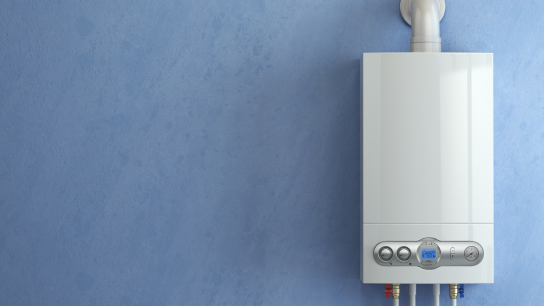
Energy efficiency is no longer a nice-to-have feature in the storage electric water heater market — it is a fundamenta...
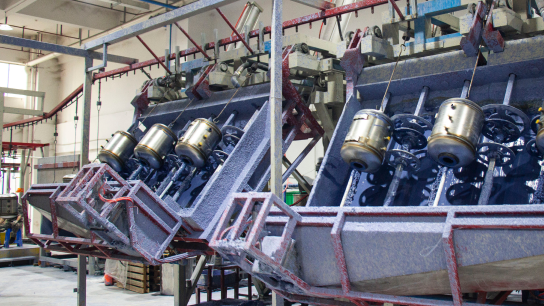
If you are a brand owner, distributor, or project contractor sourcing storage electric water heaters, there is one compo...

If you are a kitchen appliance brand, distributor, or project contractor, one of the most important product line decisio...