

Search
Enter keywords to search for products, blog posts, and more.
Enter keywords to search for products, blog posts, and more.
Home > Integrated Cooker vs. Separate Range Hood and Stove: Which Is Better for Your Kitchen Product Line?
If you are a kitchen appliance brand, distributor, or project contractor, one of the most important product line decisions you face is whether to offer integrated cookers, separate range hoods and gas stoves, or both. Each approach serves different market segments, installation scenarios, and end-user preferences — and the choice has significant implications for your inventory management, pricing strategy, and competitive positioning.
This article provides a structured comparison between integrated cookers and separate hood-and-stove configurations, examining the technical, commercial, and market factors that should inform your product line strategy.
What Is an Integrated Cooker and How Does It Work?
An integrated cooker (sometimes called a "集成灶" in Chinese, or "all-in-one cooker" in English marketing) is a single appliance unit that combines a downdraft range hood, a gas cooktop, and often a steam oven or baking oven — all within a single floor-standing cabinet.
The key engineering innovation of the integrated cooker is its side-draft or downdraft smoke extraction system. Unlike a traditional range hood that is mounted above the cooktop and pulls smoke upward, the integrated cooker's extraction system captures cooking fumes at or near the cooktop surface level, drawing them downward or sideways into the exhaust channel. This design achieves significantly higher smoke capture rates — typically 95% or above — compared to conventional overhead range hoods, which typically capture 60 to 80% of cooking fumes depending on installation height and kitchen airflow conditions.
The all-in-one form factor also means that the integrated cooker occupies less total space than the combined footprint of a separate range hood, gas stove, and oven. This makes it particularly attractive for kitchens where cabinet space is limited or where the kitchen layout does not accommodate a standard overhead hood installation.
From a manufacturing perspective, the integrated cooker requires more complex engineering than individual appliances because it must manage the thermal, electrical, and airflow interactions between the cooktop, the oven module, and the exhaust system — all within a compact enclosure. This means that OEM manufacturers who produce integrated cookers need stronger structural design capabilities and more rigorous assembly quality control compared to manufacturers who produce only individual components.
The integrated cooker market has seen rapid innovation in recent years. New features include automatic cooking programs that adjust flame intensity and oven temperature based on the selected recipe, self-cleaning exhaust filter systems that reduce maintenance requirements, and modular oven configurations that allow the user to switch between steam, bake, and steam-bake modes. For OEM buyers, this pace of innovation means that choosing a manufacturer with active R&D investment is critical — a manufacturer that is only producing yesterday's designs will not help you stay competitive in this evolving market.
Safety Standards and Certification Requirements for Kitchen Appliances
Safety certification is a critical consideration for any kitchen appliance product line, and the requirements differ between integrated cookers and separate components in important ways.
For gas stoves and integrated cookers that include gas burners, the primary safety concerns are gas leakage, flame stability, and combustion product management. Products sold in China must carry CCC (China Compulsory Certification), which includes testing for gas tightness, ignition reliability, flame failure safety device response time, and carbon monoxide emission levels. For export markets, additional certifications may be required — CE marking for the European Union, AGA certification for Australia, CSA or UL certification for North America, and SASO for Saudi Arabia.
Range hoods are subject to electrical safety and performance standards. In addition to general electrical safety testing (grounding, insulation resistance, leakage current), range hoods are tested for extraction rate, noise level, grease filtration efficiency, and energy consumption. The specific standards vary by market — for example, EU markets require compliance with EN 61591 for household range hoods.
Integrated cookers face the most complex certification landscape because they combine gas, electrical, and thermal systems in a single product. Each module must comply with its respective standard, and the combined unit must also pass system-level safety testing that verifies no adverse interactions between modules — for example, ensuring that oven heat does not degrade the exhaust motor insulation or that gas system vibrations do not loosen electrical connections over time.
For OEM buyers, the certification burden is significantly reduced by working with a manufacturer who already holds the relevant certifications for your target markets and who has in-house testing capability to verify compliance during the product development phase. Attempting to certify a product from a manufacturer who lacks experience with your target market's standards can result in months of delays and unexpected redesign costs.
What Are the Advantages of Separate Range Hoods and Gas Stoves?
Separate range hoods and gas stoves — the traditional kitchen configuration — remain the dominant choice in most global markets, and for good reasons.
The primary advantage of separate components is flexibility. Customers can choose a range hood and stove from different product lines, at different price points, and with different feature sets. A customer might want a high-end range hood with a powerful 900 cubic meter per hour extraction rate but pair it with a mid-range gas stove — a combination that is not possible with an integrated unit.
Installation flexibility is another major benefit. Separate range hoods can be mounted at various heights above the cooktop, accommodating different kitchen ceiling heights and cabinet configurations. They can also be integrated into custom cabinetry or installed as island-mount units in open-plan kitchens. This versatility makes separate hoods the preferred choice for custom kitchen design projects and high-end residential markets.
From a service and maintenance perspective, separate components are easier to replace individually. If the range hood motor fails, only the hood needs to be repaired or replaced — the stove continues to function. With an integrated cooker, a failure in any module can potentially take the entire unit out of service until it is repaired.
For brands and distributors, separate components also offer more SKU flexibility. You can create a wider product matrix by offering multiple hood models and multiple stove models that customers can mix and match, without the inventory complexity of stocking numerous integrated cooker configurations.
Market Demand Analysis: Where Each Product Type Performs Best
Understanding which markets favor integrated cookers versus separate components is essential for product line planning.
In the Chinese domestic market, integrated cookers have experienced explosive growth over the past decade. The combination of small urban apartment kitchens, heavy-oil Chinese cooking styles (which produce significant smoke), and consumer demand for modern, space-efficient appliances has created ideal conditions for integrated cooker adoption. Major Chinese kitchen appliance brands have invested heavily in this category, and it now represents a significant share of the premium kitchen appliance market in China.
In Southeast Asian markets, integrated cookers are gaining traction in urban areas where apartment sizes are similar to Chinese cities, but market penetration is still in early stages. The growth potential here is significant, particularly as local consumers become more familiar with the product category through exposure to Chinese brands and social media.
In the Middle East and North Africa, kitchen sizes tend to be larger, and cooking styles involve less high-oil frying and more grilling, baking, and slow cooking. In these markets, separate range hoods and gas stoves remain the dominant preference. However, there is a growing niche demand for integrated cookers in compact urban apartments and for secondary kitchen installations.
In European and North American markets, separate components dominate overwhelmingly. Kitchen design culture in these regions values modularity, customization, and the ability to select individual appliances based on brand reputation and specific features. Integrated cookers are virtually unknown in mass markets, though they may have niche potential in small-format urban apartments.
For OEM buyers and distributors, this market analysis suggests a clear strategy: if your primary markets are in China and urban Southeast Asia, integrated cookers should be a priority product line. If you serve the Middle East, Europe, or the Americas, your core lineup should be built around separate range hoods and gas stoves, with integrated cookers as an optional addition for specific channels.
OEM Sourcing Considerations: Integrated Cookers vs. Separate Components
The OEM sourcing process differs significantly between these two product categories, and understanding these differences will help you manage your supply chain more effectively.
Integrated cookers require a manufacturer with strong multi-discipline engineering capabilities. The factory must be able to design and produce the gas system, the electrical system, the exhaust system, and the oven module — and ensure they all work together reliably within a single enclosure. This means fewer manufacturers are capable of producing high-quality integrated cookers compared to the larger number of factories that can produce standalone range hoods or gas stoves.
When sourcing integrated cookers, pay particular attention to the manufacturer's structural design capabilities, their thermal management testing (to ensure the oven heat does not affect the cooktop performance or the exhaust motor lifespan), and their assembly quality control process (since an integrated unit has many more connection points and potential failure modes than a standalone appliance).
For separate range hoods and gas stoves, the sourcing landscape is broader, but quality variation is also wider. Focus on extraction rate performance testing for range hoods (verified by independent laboratory reports, not just manufacturer claims), burner quality and gas safety certifications for stoves, and material quality for hood enclosures and stove surfaces (stainless steel thickness, glass panel tempering quality, etc.).
Regardless of product type, look for an OEM manufacturer who handles all product molds in-house. This gives you the ability to create custom product appearances that differentiate your brand, rather than being limited to generic shared designs. In-house mold development also means faster iteration speed when you want to update or refresh your product line.
Product Line Strategy: How to Combine Both Categories Effectively
The most successful kitchen appliance brands do not choose exclusively between integrated cookers and separate components — they build a product line that covers both categories, positioned for different customer segments and use cases.
A practical approach is to structure your product line into three tiers. The first tier is your core range of separate range hoods and gas stoves, covering a range of price points from entry-level to premium. This tier serves your broadest customer base and should include models optimized for the specific cooking styles and kitchen layouts of your target markets.
The second tier is your integrated cooker lineup, positioned as a premium, space-saving solution for urban apartments and modern kitchen renovations. This tier typically carries higher price points and margins, and appeals to customers who value design integration and convenience.
The third tier is a complete kitchen solution package that bundles hoods, stoves, and water heaters (or integrated cookers plus water heaters) into coordinated sets for property developers and project contractors. This tier is sold through B2B channels and requires the ability to deliver large quantities of matched products at project-level pricing.
Working with an OEM manufacturer who can produce all three categories — integrated cookers, separate range hoods and stoves, and electric water heaters — from a single factory gives you significant supply chain advantages. You benefit from unified quality standards, coordinated delivery scheduling, reduced supplier management overhead, and the ability to create visually matched product sets across categories.
Installation and After-Sales: What Your Sales Channels Need to Know
Whether you sell integrated cookers or separate components, the installation experience directly affects customer satisfaction and after-sales costs.
Integrated cookers are generally easier to install than separate hood-and-stove combinations because there is only one unit to position, one gas connection, one electrical connection, and one exhaust duct to route. The manufacturer designs the unit with standardized dimensions and pre-planned connection points, reducing on-site adaptation requirements. This makes integrated cookers particularly suitable for property development projects where hundreds of identical units need to be installed efficiently. On average, an experienced installer can complete an integrated cooker installation in 60 to 90 minutes, compared to 2 to 3 hours for a separate hood and stove combination.
Separate range hoods require more installation planning — the hood must be mounted at the correct height above the cooktop (typically 650mm to 750mm for side-suction models and 700mm to 800mm for top-suction models), aligned with the exhaust duct routing, and secured to the wall or ceiling structure with appropriate hardware. Gas stoves require a separate gas connection with safety testing. The total installation time and complexity is higher, which means higher installation costs for the end customer or higher project costs for contractors.
When building your product line, ensure that your OEM manufacturer provides comprehensive installation documentation — including dimensional drawings, mounting templates, gas connection specifications, electrical wiring diagrams, and exhaust duct routing guidelines — in the languages relevant to your target markets. Good installation documentation reduces on-site errors, shortens installation time, and minimizes the volume of installation-related customer complaints that flow back to your after-sales team.
For after-sales support, having a manufacturer that can supply spare parts reliably and provide technical consultation for field issues is essential. This is easier when you work with a manufacturer who designs and produces all key components in-house, because they have complete knowledge of the product architecture and can diagnose issues without depending on third-party component suppliers for information.
Cost Structure Comparison: What Affects Your Margin
Understanding the cost structure differences between integrated cookers and separate components helps you plan your pricing strategy and margin expectations.
Integrated cookers have a higher per-unit manufacturing cost than either a range hood or a gas stove individually, because they combine multiple functional modules into a single assembly with more components, more complex manufacturing processes, and more rigorous quality testing requirements. However, the total system cost (an integrated cooker versus a separate hood plus a separate stove plus a separate oven) is often comparable or even lower, because the integrated design eliminates redundant structural components and reduces total material usage.
For brands and distributors, the key insight is that integrated cookers typically command higher retail prices and higher absolute margins per unit, even though the percentage margin may be similar to separate components. This makes integrated cookers attractive for brands positioned in the mid-to-premium segment of the market.
Separate range hoods and gas stoves offer different margin dynamics. Entry-level models in both categories face intense price competition, with thin margins. Mid-range and premium models — particularly those with differentiated design features, higher extraction rates, or advanced safety systems — offer more comfortable margins but require stronger brand marketing to justify the price premium.
When negotiating with OEM manufacturers, be aware that integrated cookers typically have higher MOQ requirements (because of the more complex production setup) and longer lead times (because of the multi-module assembly process). Separate components generally have lower MOQs and shorter lead times, making them more accessible for brands that are entering a new market or testing demand for a new product line.
Freight and logistics costs also differ. Integrated cookers are larger and heavier than individual components, which means higher per-unit shipping costs — particularly for sea freight where container space utilization matters. If you are exporting products internationally, calculate the landed cost including freight for both product types to get an accurate margin comparison.
Manufacturing Process Differences: What Happens on the Factory Floor
For buyers who visit OEM factories, understanding the manufacturing process differences between integrated cookers and separate components helps you evaluate production quality more effectively.
Range hood manufacturing involves sheet metal cutting and forming, spot welding of the hood enclosure, surface treatment (degreasing and powder coating), motor and fan assembly installation, electrical wiring and control board installation, and final testing (including extraction rate measurement, noise level testing, and electrical safety testing). The key quality parameters to observe are the precision of sheet metal forming (which affects fit and finish), the quality of the powder coating (which affects corrosion resistance and appearance durability), and the motor specification (which determines extraction performance and noise level).
Gas stove manufacturing involves burner casting or stamping, pan support fabrication, top panel cutting (for glass or stainless steel surfaces), gas valve assembly, ignition system installation, and safety testing (including gas leak testing, flame stability testing, and thermocouple response testing). The critical quality parameters are burner quality (which affects flame uniformity and thermal efficiency), gas valve precision (which affects flame control accuracy and safety), and glass panel tempering quality (for glass-top models, which affects both safety and appearance).
Integrated cooker manufacturing combines elements of both processes plus additional steps: the structural frame assembly, the oven module integration, the exhaust system assembly, and the comprehensive functional testing of all modules working together. The manufacturing complexity is significantly higher, which is why fewer factories are capable of producing high-quality integrated cookers. When visiting an integrated cooker production line, pay particular attention to the assembly sequence, the inter-module connection quality, and the final testing protocol — particularly the thermal interaction testing that verifies the oven module does not adversely affect the cooktop or exhaust system performance.
Future Trends: Where the Kitchen Appliance Market Is Heading
Several industry trends are shaping the future of both integrated cookers and separate kitchen appliance components, and understanding these trends can inform your long-term product line planning.
Smart connectivity is becoming a standard feature expectation in premium kitchen appliances. Range hoods with automatic speed adjustment based on cooking intensity sensors, gas stoves with app-based flame monitoring, and integrated cookers with Wi-Fi-enabled recipe-guided cooking modes are all entering the market. For OEM buyers, this means evaluating whether your manufacturer has the electronic design capability to integrate IoT modules and develop companion app functionality.
Energy efficiency regulations are tightening globally. Gas stove manufacturers are investing in higher-efficiency burner designs, and range hood manufacturers are developing EC (electronically commutated) motors that consume significantly less electricity than traditional AC motors while delivering equal or superior extraction performance. Products that anticipate these regulatory trends will have a longer market life before requiring redesign for compliance.
Design aesthetics are shifting toward minimalism and built-in integration. Consumers increasingly want kitchen appliances that blend seamlessly into cabinetry rather than standing out as separate objects. This trend favors both built-in range hoods (which are concealed within kitchen cabinets) and integrated cookers (which present a unified, furniture-like appearance). For OEM manufacturers, this means investing in design capability and offering more customization options for panel materials, colors, and finishes.
The health and safety category is growing in importance. Range hoods with air purification functions, gas stoves with automatic flame failure cut-off systems, and integrated cookers with cooking fume filtration are all responding to consumer demand for healthier kitchen environments. Manufacturers with R&D capabilities in these areas can offer differentiated products that command premium pricing.
For brands and distributors, staying ahead of these trends requires working with an OEM manufacturer that is not just executing today's designs but actively investing in tomorrow's technologies. A manufacturer with a strong patent portfolio, an active R&D team, and a track record of being first-to-market with new features is a partner that will help you maintain competitive relevance over the long term.

Energy efficiency is no longer a nice-to-have feature in the storage electric water heater market — it is a fundamenta...
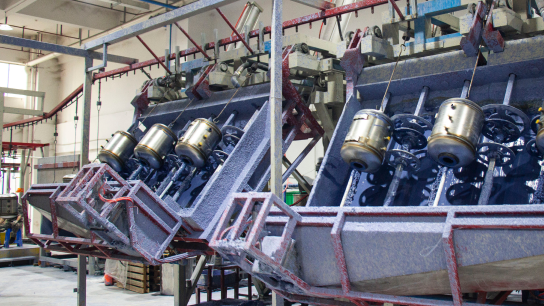
If you are a brand owner, distributor, or project contractor sourcing storage electric water heaters, there is one compo...
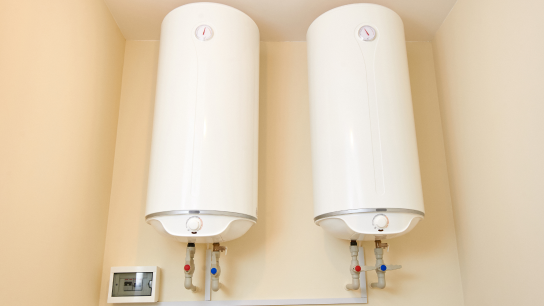
For brands, distributors, and project contractors looking to source electric water heaters, China remains the world's mo...